Introduction
One of the biggest myths in fitness is that you need extreme diets, complicated meal plans, or expensive supplements to transform your body.
In reality, sustainable fat loss and muscle growth come down to three main factors:
- Smart nutrition
- Consistent training
- Long-term discipline
Most people struggle not because they lack motivation, but because they lack a clear strategy.
They eat randomly, skip meals, follow trends, and eventually lose progress.
This guide will teach you how to structure your nutrition the right way, including practical high-protein recipes, meal prep strategies, and a complete weekly meal plan designed for real results.

Part 1 — Understanding Body Transformation
Before diving into recipes and meal plans, it is important to understand how the body actually changes.
Most people approach fitness the wrong way because they misunderstand this process.
Your body changes when you consistently apply stress (training) and provide the correct recovery tools (nutrition and rest).
If either one is missing, progress slows down dramatically.
That is why nutrition is often called the hidden factor in fitness success.
Many people train hard but fail to eat correctly.
Over time, this creates frustration and eventually causes them to quit.
However, when you combine smart nutrition with proper training, results begin to accelerate.
Part 2 — The Three Nutrition Pillars of Fitness Success
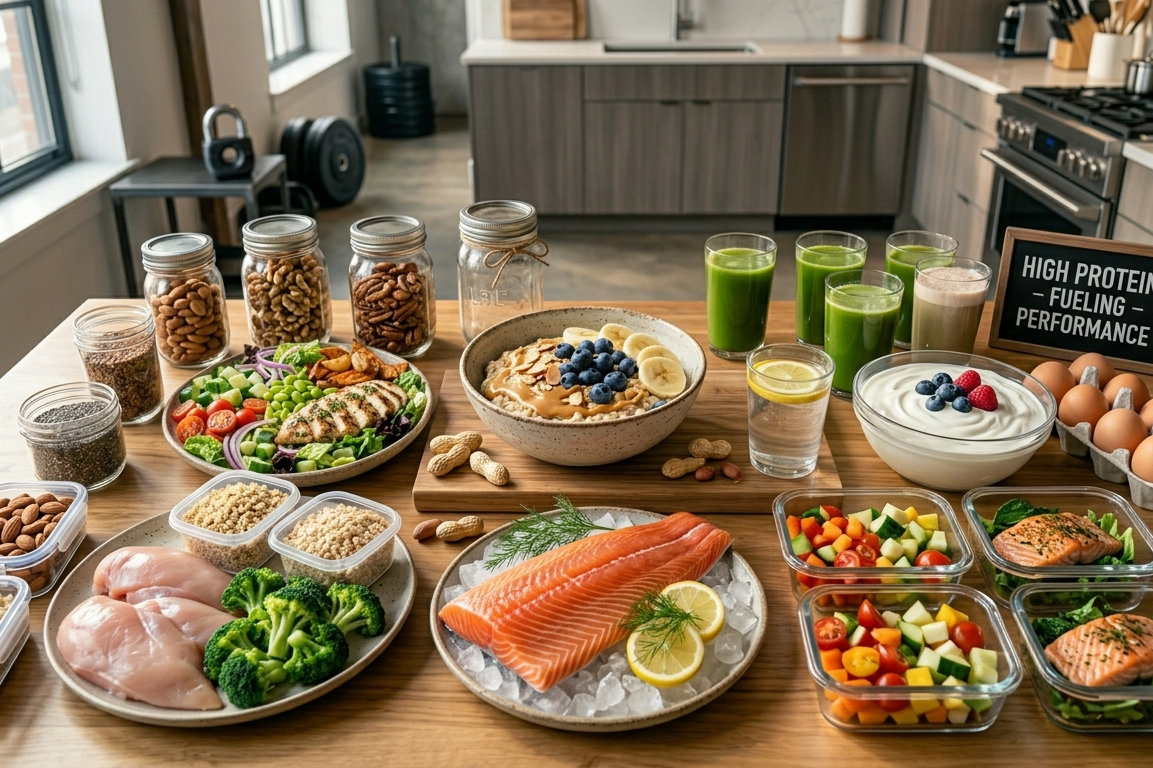
1. Protein: The Foundation of Muscle
Protein supports:
• Muscle repair
• Muscle growth
• Recovery
• Strength development
Without enough protein, muscle growth becomes extremely difficult.
Research shows that active individuals should aim for:
1.6 to 2.2 grams of protein per kilogram of body weight.
For example:
If someone weighs 80 kg, they should consume roughly:
130–175 grams of protein per day.
This may sound like a lot, but it becomes easier when meals are structured properly.
2. Carbohydrates: The Energy Source
Carbohydrates are often misunderstood.
Many people avoid carbs because they think they cause fat gain.
But the truth is that carbohydrates are the body’s main energy source.
Without carbs:
• Workouts become weaker
• Recovery slows down
• Muscle growth decreases
The key is choosing the right types of carbohydrates.
Best carbohydrate sources include:
• Rice
• Oats
• Potatoes
• Fruits
• Whole grains
These foods provide sustained energy and support performance.
3. Healthy Fats: Hormones and Recovery
Fats are essential for hormone production, especially testosterone, which plays a major role in muscle development.
Healthy fat sources include:
• Avocado
• Olive oil
• Almonds
• Walnuts
• Fatty fish
A balanced diet should always include some healthy fats.
Part 3 — The Most Effective Muscle-Building Recipes
Now let’s move into the practical section of this guide.
These recipes are simple, effective, and designed for people who want results without complicated cooking.
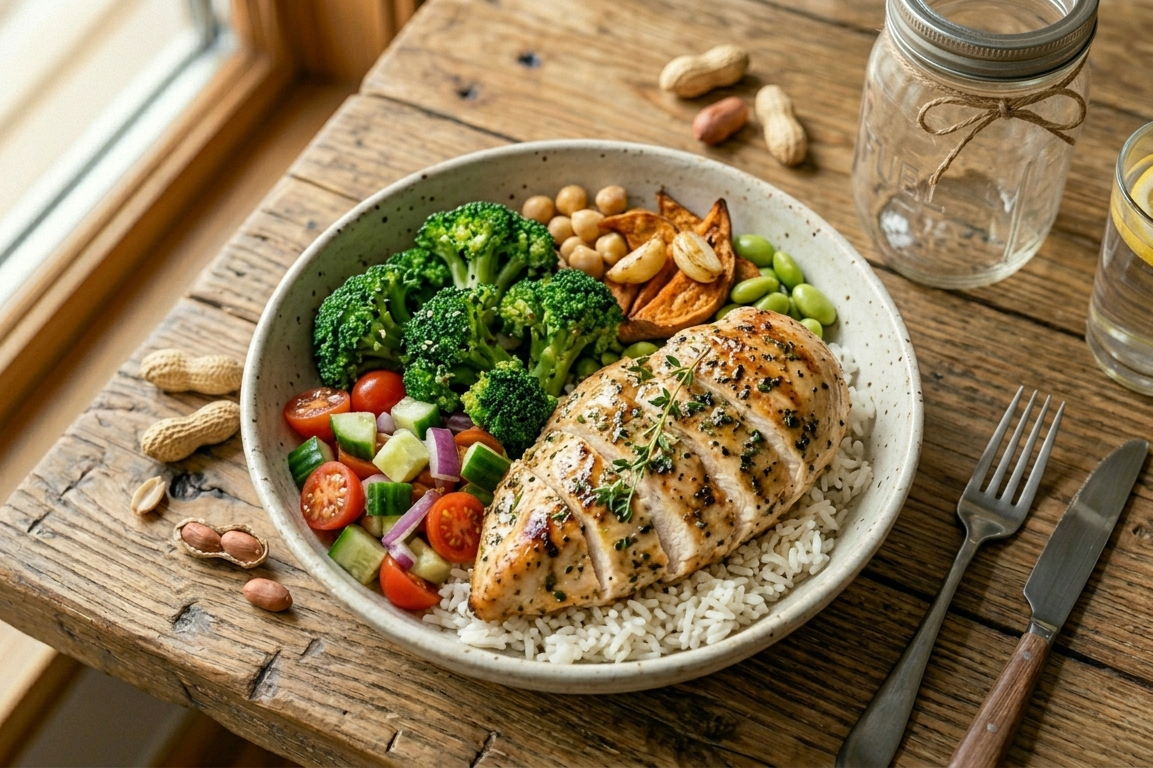
Recipe 1 — High-Protein Muscle Bowl
This is one of the best meals for muscle growth.
It is balanced, easy to prepare, and ideal after training.
Ingredients:
• 200g grilled chicken breast
• 1 cup jasmine or brown rice
• Steamed broccoli
• Half avocado
• Olive oil
• Garlic seasoning
Instructions:
Cook the rice first. While the rice cooks, grill the chicken breast with light seasoning. Steam the broccoli until tender. Combine everything in a bowl and drizzle olive oil on top.
Why it works:
This meal contains protein, carbohydrates, and healthy fats — the perfect recovery combination.
Recipe 2 — Strength Builder Breakfast
Starting your day with the right meal makes a huge difference.
Ingredients:
• 4 eggs
• Oatmeal
• Banana
• Peanut butter
Instructions:
Prepare the oatmeal first. Cook the eggs scrambled or boiled. Slice the banana and add a small amount of peanut butter.
Benefits:
This breakfast provides sustained energy for morning workouts and supports muscle recovery.
Recipe 3 — Lean Muscle Lunch
Ingredients:
• Lean ground beef
• Sweet potato
• Spinach
• Olive oil
This meal is excellent for improving strength and iron intake.
Recipe 4 — High-Protein Recovery Smoothie
Ingredients:
• Protein powder
• Frozen berries
• Almond milk
• Oats
• Chia seeds
Blend all ingredients together.
Perfect for:
• Post-workout recovery
• Busy schedules
• Quick calories
Recipe 5 — Fat-Loss Protein Salad
Ingredients:
• Grilled chicken or tuna
• Lettuce
• Tomatoes
• Cucumber
• Olive oil and lemon
This meal is perfect during cutting phases.
Part 4 — Weekly Meal Plan (Optimized for Muscle Growth)
Here is a simple but powerful weekly structure.
This helps maintain consistency, which is the most important factor in nutrition success.
Monday
Breakfast
Protein oats with eggs
Lunch
Chicken rice bowl
Snack
Protein smoothie
Dinner
Beef and vegetables
Tuesday
Breakfast
Greek yogurt with fruit and nuts
Lunch
Turkey and rice meal prep
Snack
Protein shake
Dinner
Salmon with potatoes
Wednesday
Breakfast
Egg omelet with toast
Lunch
Chicken salad
Snack
Protein smoothie
Dinner
Lean beef bowl
Part 5 — Meal Prep Strategy (Secret of Consistency)
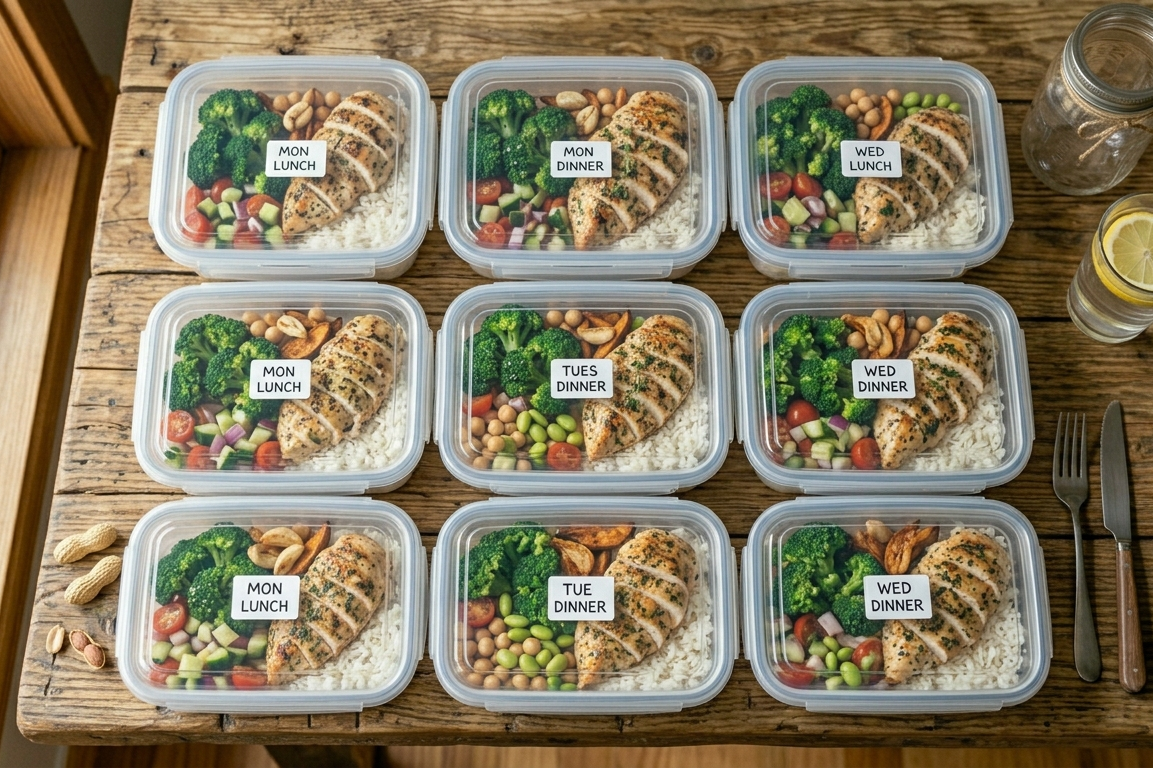
One of the biggest reasons people fail their diet is because they rely on motivation instead of preparation.
Meal prep solves this problem.
Instead of deciding what to eat every day, you prepare meals in advance.
Benefits of meal prep:
• Saves time
• Reduces bad food choices
• Improves discipline
• Helps control calories
Professional athletes use meal prep consistently because it removes decision fatigue.
Part 6 — How to Stay Motivated with Nutrition
Motivation fades, but systems work.
Here are proven strategies:
Set realistic goals
Track your meals
Keep healthy food available
Avoid keeping junk food at home
Celebrate small progress
Fitness is a long-term journey.
Not a short challenge.
Part 7 — Advanced Nutrition Tips (SEO Gold Section)
This section helps articles rank better because it answers detailed questions.
Should you eat before workouts?
Yes, especially if your goal is performance.
A good pre-workout meal includes:
Protein + carbohydrates.
Example:
Chicken and rice or oats with protein.
Best post-workout foods
Your muscles are most receptive to nutrients after training.
Good choices include:
Protein shakes
Chicken meals
Eggs and rice
Greek yogurt
How often should you eat?
Most people benefit from:
3 to 5 meals per day.
This helps maintain energy levels and protein intake.
Part 8 — Common Mistakes That Slow Results
Eating too little protein
Skipping breakfast
Not drinking enough water
Overeating junk food
Being inconsistent
These mistakes are extremely common and can delay results by months.
Part 9 — The Mindset of Successful Athletes
People who transform their bodies usually share the same habits:
Consistency
Discipline
Patience
Structured routines
Fitness success is not random.
It is built daily.
Conclusion
Transforming your body is not about perfection. It is about consistency, smart nutrition, and long-term discipline.
If you follow the principles and recipes in this guide, you will give your body exactly what it needs to grow stronger, leaner, and healthier.
Stay consistent.
Results will follow.